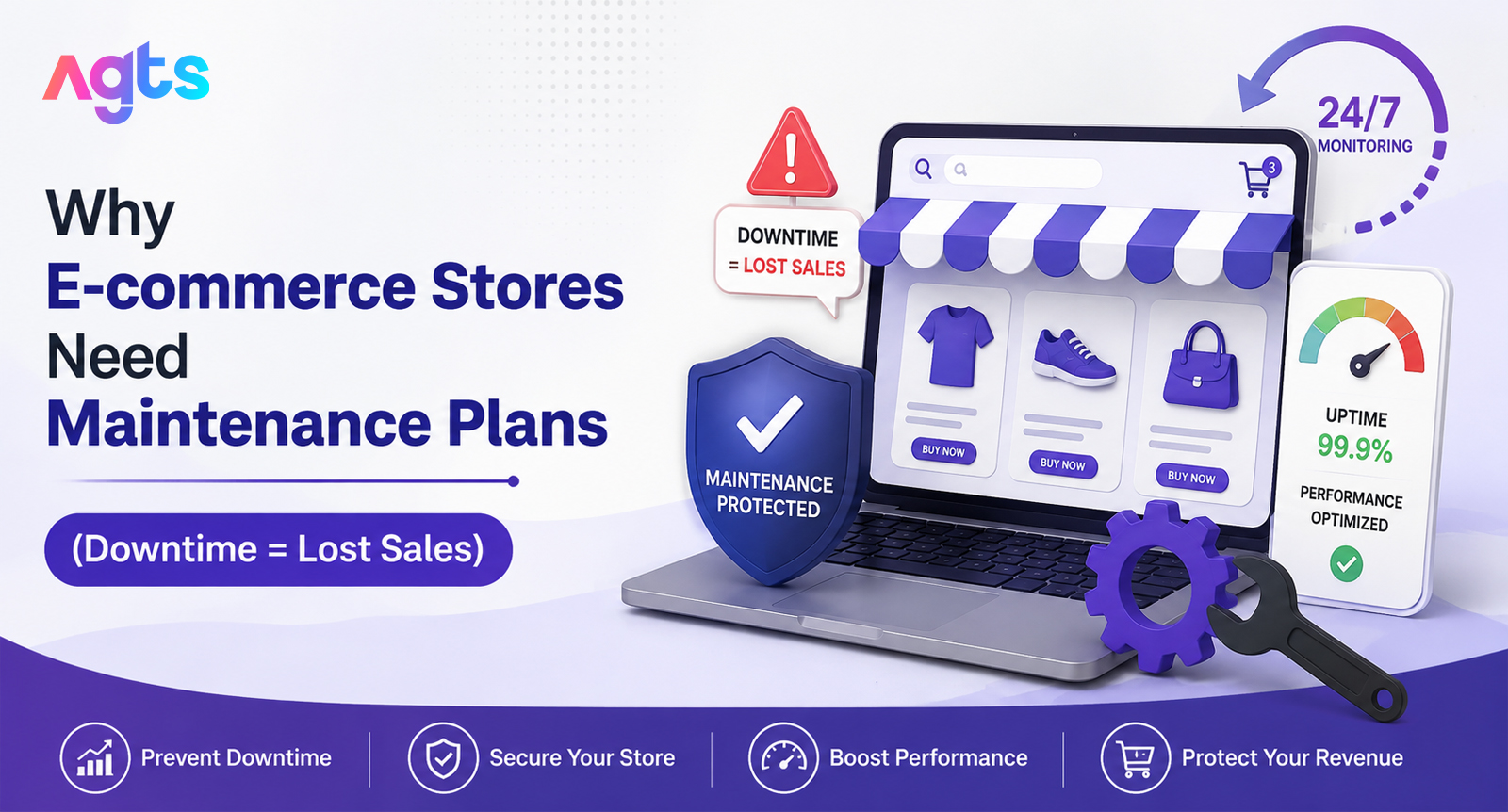
An online store that is slow, down or broken loses not only visitors, but sales that will never be recovered — one minute at a time. An eCommerce business's uptime is not just a nice to have, it's connected to revenue. However, there are many stores that still see maintenance as an afterthought, attempting to repair it only after a customer complains or a checkout process breaks in the middle of a transaction.
That's why ecommerce website maintenance services are not an option, but an essential part of any ecommerce business that relies on a website for revenue. The truth behind that and what a maintenance plan should include.
Why Downtime Hits E-commerce Harder Than Other Sites
A content site going down for an hour is annoying. An e-commerce store going down for an hour means:
- Lost transactions that don't automatically resume when the site comes back
- Abandoned carts from customers who simply move to a competitor
- Adverse trust – customers that have previously experienced an error are less likely to return
- SEO impact — downtime or slow load time will impact a site's search engine visibility in the future
An ecommerce site is not a brochure site. Any checkout broken, any payment gateway that fails, slow product pages all have a direct measureable cost.
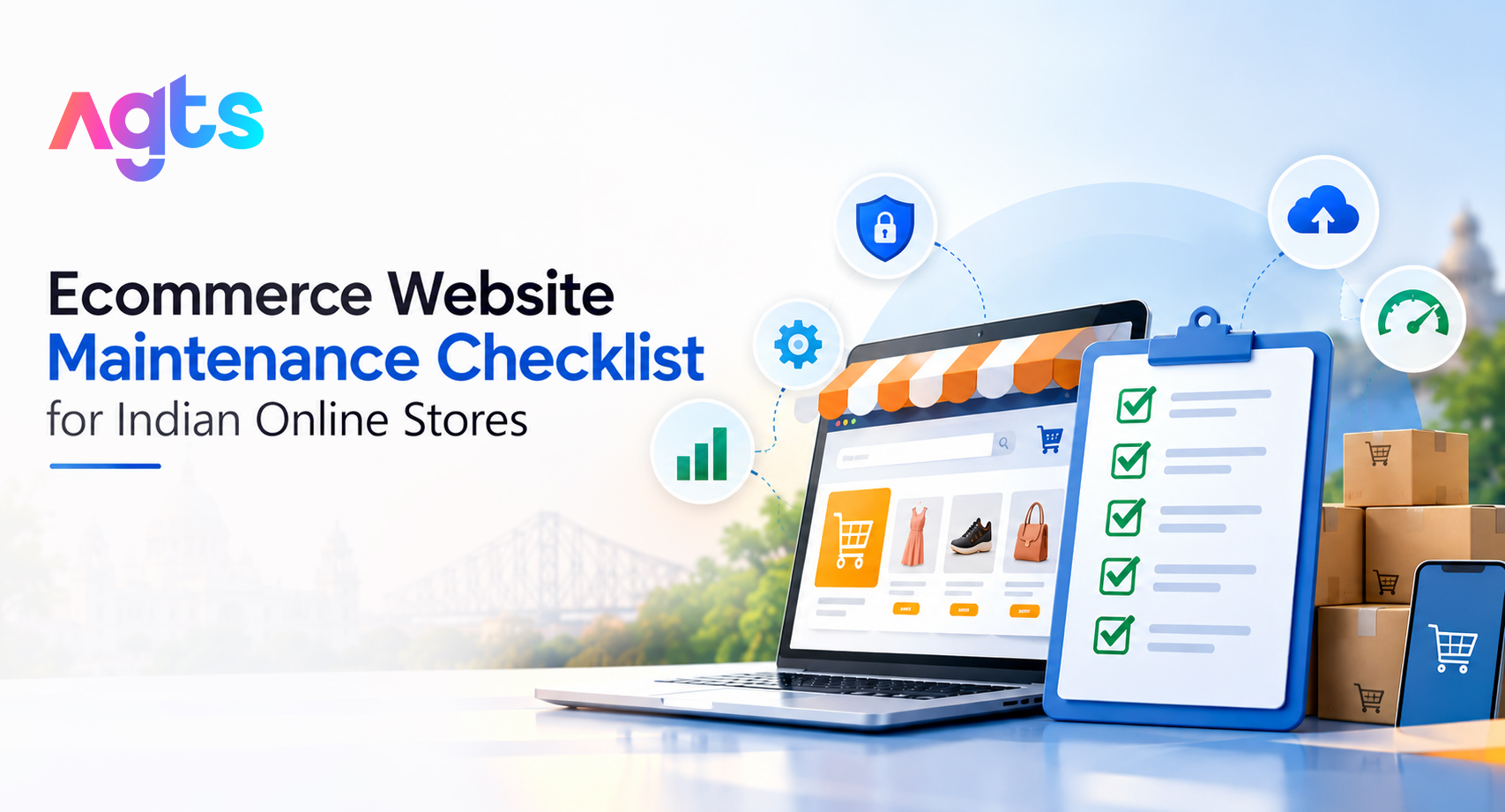
What Ecommerce Website Maintenance Services Should Cover
Not all maintenance plans are built the same. A genuinely useful plan for an online store should include:
Uptime & performance
- 24/7 uptime monitoring with instant alerts
- Page speed optimization (slow load times directly increase cart abandonment)
- Server and database performance checks
Security
- Regular malware and vulnerability scans
- PCI-DSS related security checks for payment processing
- SSL certificate monitoring
- Firewall and login protection against bot attacks
Platform & plugin updates
- The updates to CMS/platform core (Shopify, WooCommerce, Magento or custom builds)
- Payment gateway and Shipping plugin updates.
- Also provides 3rd party integration maintenance, such as inventory sync, CRM, and marketing tools.
Backups & recovery
- Scheduled backups of both site and database
- Fast restore capability in case of a crash or attack
Ongoing optimization
- Broken link and 404 monitoring
- Checkout flow testing
- Inventory and catalog sync checks
- Mobile responsiveness checks across devices
The Real Cost of Skipping Maintenance
Many store owners assume maintenance is an expense they can delay. In practice, skipping it usually costs more:
- A single hour of downtime during a sale event can wipe out days of marketing spend
- An unpatched vulnerability that leads to a security breach can cost far more than a year of maintenance fees — in remediation, reputation damage, and potential compliance penalties
- A slow, glitchy checkout flow quietly bleeds conversions every single day, even without a dramatic outage
Maintenance isn't about preventing rare disasters — it's about protecting the everyday reliability that keeps customers checking out without friction.
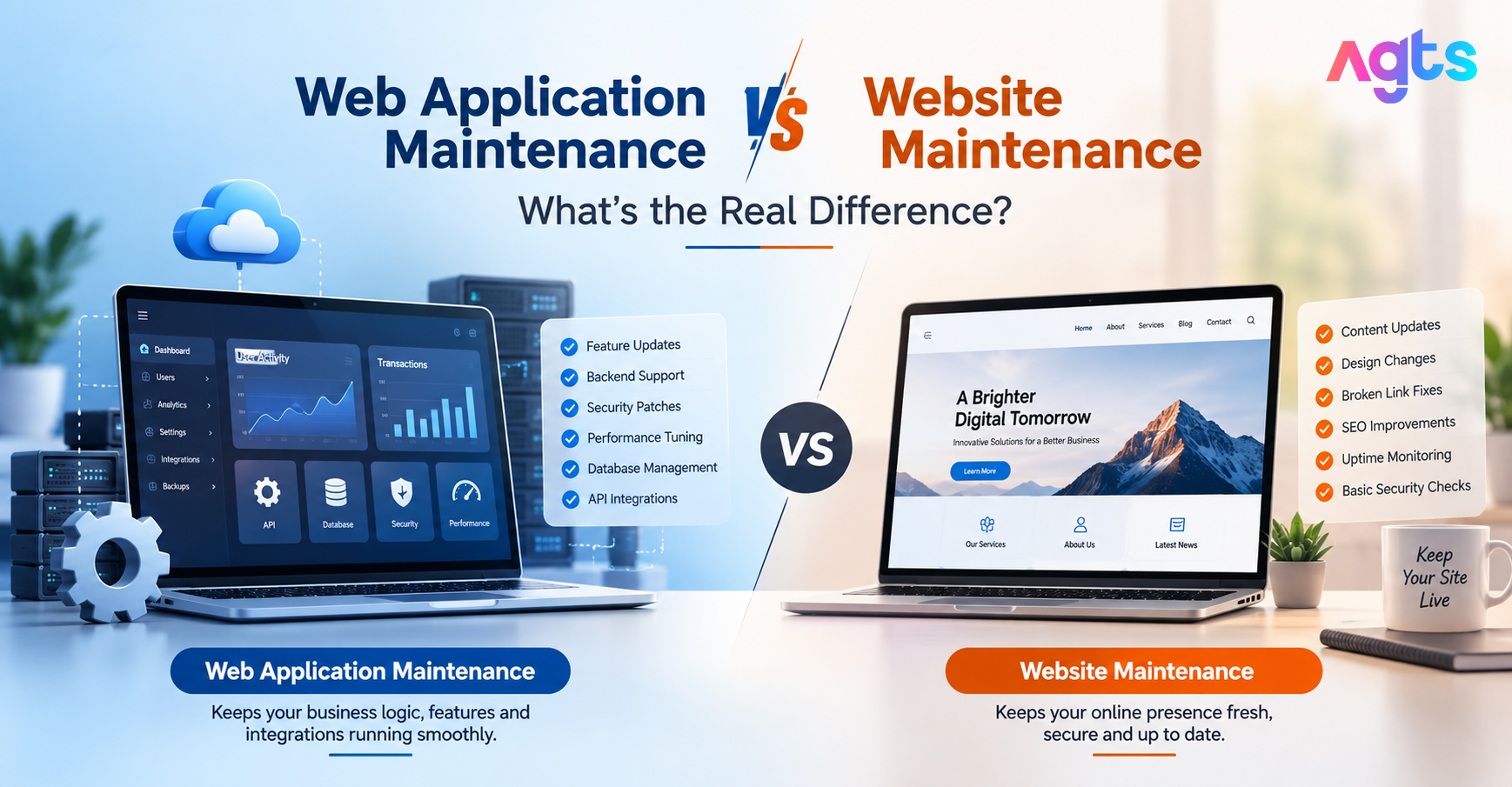
How Ecommerce Maintenance Differs From Regular Website Maintenance
A standard website maintenance plan and an e-commerce maintenance plan aren't the same thing. E-commerce stores need additional, specialized coverage:
|
Factor |
Standard Website |
E-commerce Store |
|
Core risk |
Content/info accuracy |
Live transactions and revenue |
|
Payment systems |
Not applicable |
Payment gateway monitoring required |
|
Uptime sensitivity |
Moderate |
High — every minute has a dollar value |
|
Security scope |
General |
PCI-related compliance considerations |
|
Update complexity |
CMS + plugins |
CMS + plugins + inventory + payment + shipping integrations |
This is why a generic maintenance plan often falls short for online stores — the scope needs to account for the additional moving parts a storefront depends on.
Choosing the Right Maintenance Plan for Your Store
Before signing up with a provider, confirm:
- Do they monitor uptime and checkout flow specifically, not just general site health?
- What's the response to SLA during peak sales periods (festive season, flash sales)?
- Does payment gateway and integration maintenance come in the package or is it a separate fee?
- How often does the backup occur, and what is the time to fully restore?
- Are they familiar with your platform (Shopify, WooCommerce, Magento, custom built)?
A vague, generic maintenance package is a risk for any e-commerce business — the scope needs to match how much revenue actually depends on the site staying up.
Why Store Owners Choose AlphaGenix Technology Solutions (AGTS)
AlphaGenix Technology Solutions (AGTS) offers ecommerce website maintenance services built specifically around the realities of running a live online store — not a generic website maintenance package applied to a storefront. For B2B and startup e-commerce businesses across India, AGTS provides:
- 24/7 uptime and checkout flow monitoring
- Platform-specific expertise across Shopify, WooCommerce, Magento, and custom builds
- Payment gateway and integration maintenance included as standard
- Priority response during high-traffic sales periods
- Transparent, tiered plans with no hidden scope gaps
If downtime is costing you sales you'll never see reflected in a bounce-rate report, it's worth talking to a partner that treats e-commerce maintenance as its own discipline — not an afterthought.
Talk to AGTS about ecommerce website maintenance services →
Frequently Asked Questions
Why do e-commerce stores need a dedicated maintenance plan?
Because downtime, slow load times, or checkout errors directly translate to lost sales — unlike a content site, every technical issue on an e-commerce store has a measurable revenue impact.
What's included in ecommerce website maintenance services?
Typically uptime monitoring, security scans, platform and plugin updates, payment gateway maintenance, backups, and performance optimization.
How much downtime can actually affect sales?
Even short outages during peak traffic or sales events can result in significant lost revenue, plus longer-term SEO and trust impact from repeated issues.
Is ecommerce maintenance different from regular website maintenance?
Yes — e-commerce sites require additional coverage for payment gateways, inventory sync, and checkout flow reliability that standard website maintenance plans don't typically include.
How often should an e-commerce site be monitored?
Ideally 24/7, especially around high-traffic periods like sales events and festive seasons when downtime risk and revenue impact are both highest.