We hear some version of this every few weeks from business owners.
"We post every week. Diwali, Durga Puja, Independence Day, team birthdays, all of it. The page looks busy. But not one client has ever told us they found us on Instagram."
Sound familiar? You're not alone and quite honestly, it's not because you're not trying hard enough. The majority of B2B firms operate their social media the same as a clothing brand or a coffee shop. They chase likes and reach. That works when you're selling ₹500 products to thousands of people. It doesn't work when you need ten or twenty serious buyers to trust you with a contract worth lakhs.
Let's go through what is typically the issue, what kind of content attracts people to pick up the phone, and what you should look for if you're considering hiring this top social media marketing company in India to take care of it for you.
B2B Buyers Don't Scroll Like Shoppers
Think about how you buy something for your own business. New accounting software, a packaging supplier, a web developer. You don't see one reel and sign up the same day. You ask around. You search their site, perhaps their LinkedIn. Discuss it with your partner or your accountant. It takes weeks, if not months.
Your buyers behave the same way. So the goal of B2B social media isn't to go viral. It's easy, and a lot less flashy: stay in front of the right people, demonstrate your expertise and make it very convenient for the people who are ready to contact you.
Whatever you think of as social media rules, they suddenly don't make sense.
A Quick Gut Check: Is Your Social Media Actually Working?
Be honest with yourself as you read this.
Go to your last 20 posts and scroll down. How many people discuss what you really do? or a problem you solve for clients? If your social media posts are mostly about holidays and celebrations at the office, your followers won't know why they should hire you.
Now check out who is liking these posts. If this is your own team, your friends and a few relatives, the engagement is good, but not a business.
Then check out your profile visits and site clicks. If you have a lot of views and hardly any visits, it means that people are ignoring you.
A few other things we see all the time: a bio with no link or WhatsApp number, a founder whose LinkedIn hasn't had a post in a year, and nobody in the company who can say which enquiries came from social media.
If more than two or three of these hit home, your social media is doing some brand awareness at best. Not lead generation.
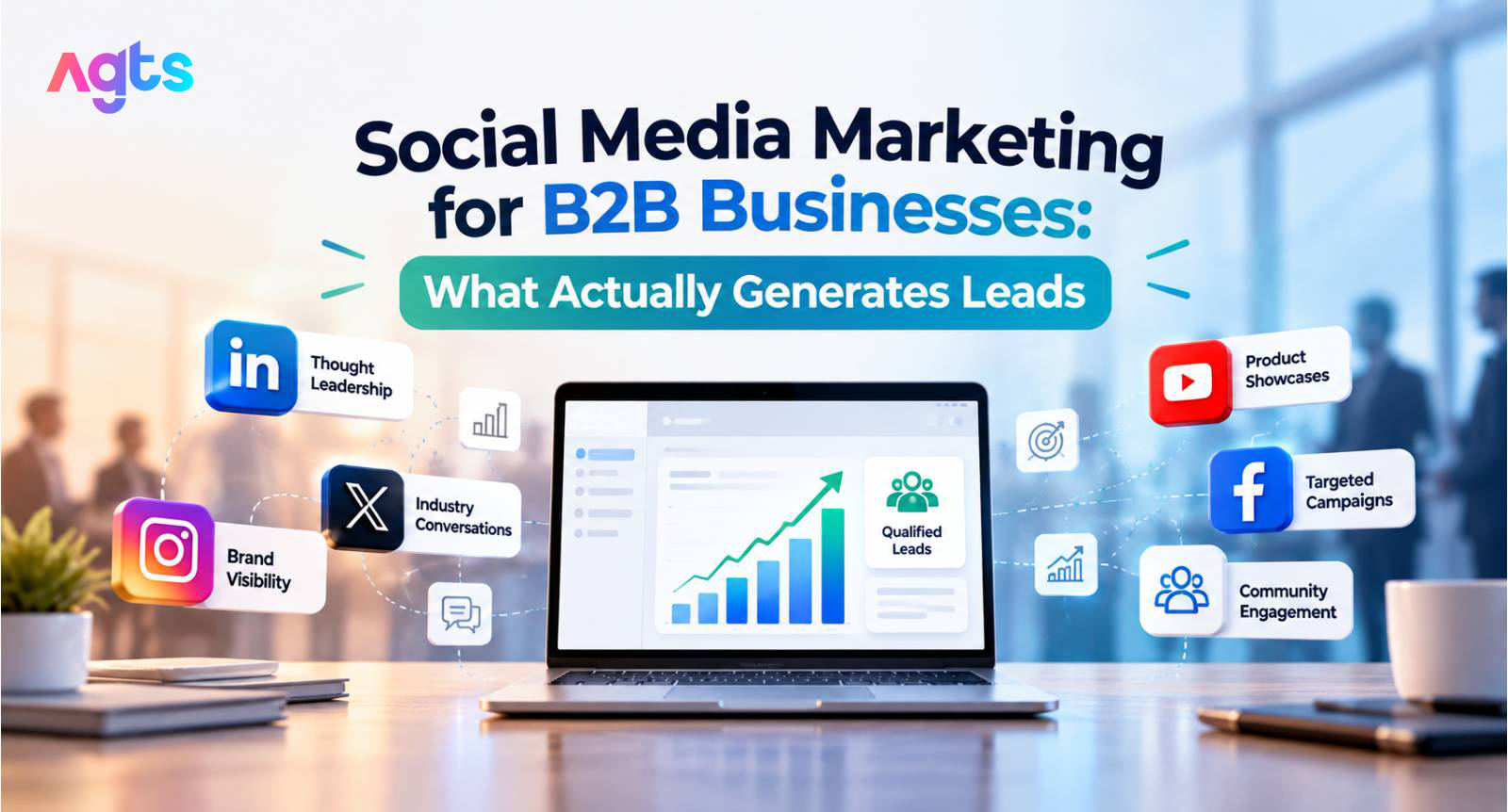
Where Should You Actually Show Up?
You don't need to be on every platform. Pick the ones your buyers really use and do them properly.
|
Platform |
Who you'll reach |
What tends to work |
|
|
Founders, managers, decision-makers |
Founder posts, client stories, practical tips, carousels |
|
|
SME owners, local businesses |
Client stories, short videos, offers, retargeting |
|
|
People checking whether you're "real" |
Behind-the-scenes reels, before/after work, your team |
|
YouTube |
Buyers who need things explained |
Short explainers, demos, client testimonials |
|
|
People who already know you |
Updates to opted-in contacts, quick follow-ups |
For most B2B businesses in India, we'd put LinkedIn first. Facebook and Instagram still matter, but mostly as proof. Prospects often look you up there after hearing about you somewhere else, just to see whether you look active and trustworthy.
The Posts That Actually Get People to Message You
After running social media for a lot of B2B accounts, we keep coming back to the same handful of content types. None of them are complicated.
- Talk about their problems, not your services. "We offer website maintenance" gets scrolled past. "Your website gets traffic but nobody calls. Here's usually why" gets read, because the reader sees their own situation in it. Every industry has these everyday frustrations. Write about them.
- Show proof. A short client story beats any amount of self-praise. What was going wrong, what you did, what changed. If the client agrees, add real numbers and a line from them. Even one good case study a month makes a difference.
- Let people see how you work. Your process, a checklist your team uses, a quick look at a project in progress. B2B buyers are choosing someone they'll work with for months or years, and seeing the people behind the logo helps them trust you.
- Get the founder posting. This one is underrated. On LinkedIn, a founder sharing honest lessons, opinions and small wins often gets more reach than the company page, and far more conversations. People buy from people.
- Give them an easy next step. Every few posts offer something useful: a free audit, a checklist, a short call. Make it clear how to ask for it. Plenty of people are interested but won't reach out unless you invite them.
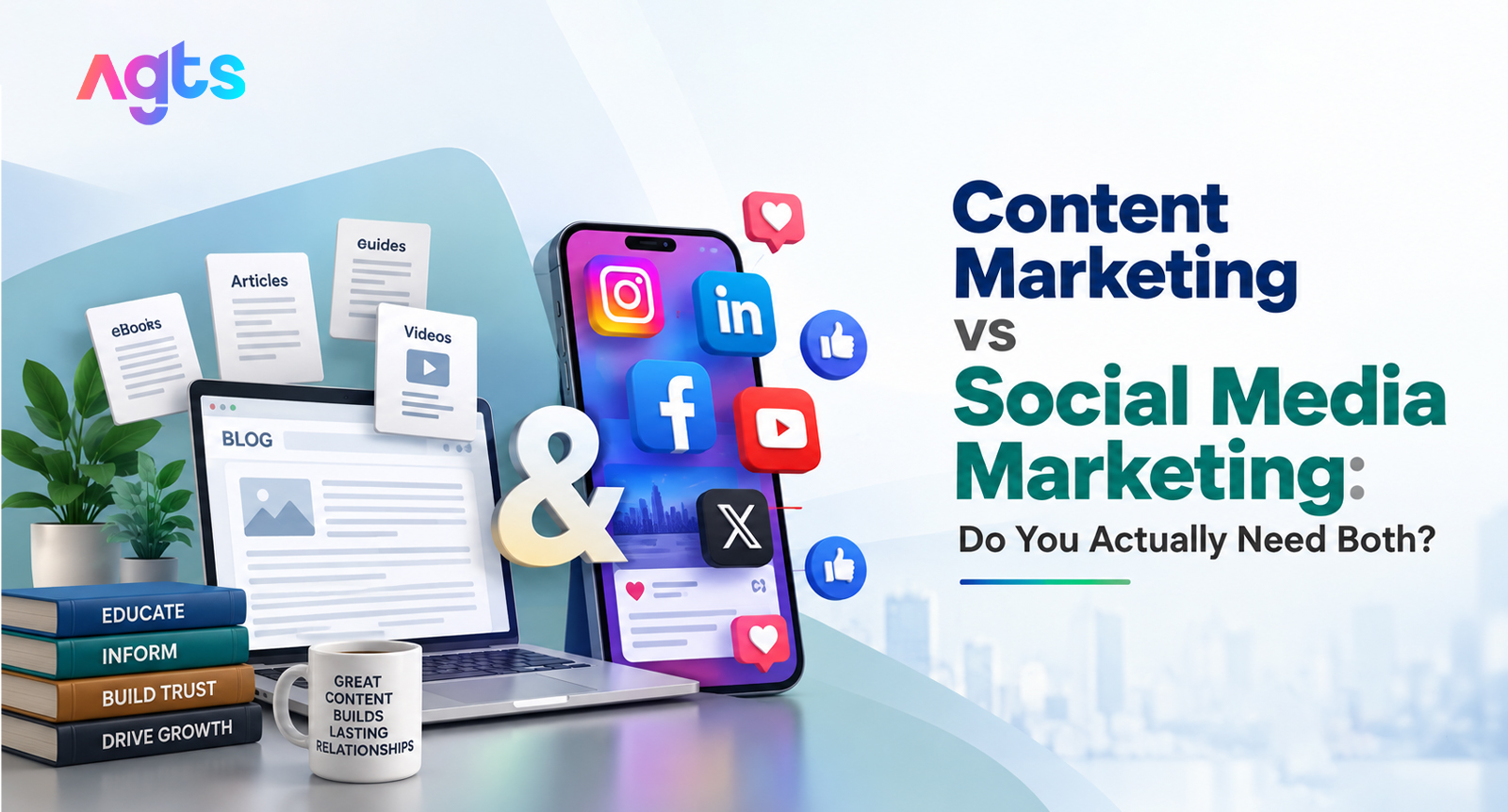
If you're wondering how all this fits with your blog and website content, we've covered that in our post on content marketing vs social media marketing.
How Often Is Enough?
Less than you'd think, as long as you don't disappear. Three solid posts a week, every week, will beat a burst of ten posts followed by a month of silence.
For most of the B2B brands we work with, the rhythm looks something like this: three or four posts a week on LinkedIn, split between the company page and the founder, and about three a week on Facebook and Instagram, with at least one short video in there. Festival posts are fine. Just keep them to roughly one in every four, so your feed still says something about your business.
Plan the month ahead, but leave a bit of room. A client win or a piece of industry news posted on the day often does better than anything you scheduled two weeks earlier.
Stop Counting Likes
Likes are the easiest number to report and the least useful one. We'd much rather see a post with 15 likes that brings two messages from real prospects than one with 500 likes from people who will never buy.
The numbers worth watching are:
- profile visits (are people curious?)
- website clicks from your posts
- DMs and WhatsApp messages
- enquiries that came from social media
- how many of those enquiries were actually a good fit
Two small habits make this possible. Put UTM tags on every link you share, so Google Analytics knows the visit came from social media. And ask every new inquiry, "How did you hear about us?" Give it two or three months and you'll know which platform, and which kind of post, is really pulling its weight.
What About Paid Ads?
Ads can speed things up, but they won't fix a weak profile. If someone clicks your ad and lands on a page with three posts from last year, that money is gone.
Once the basics are sorted, a few options are worth testing. LinkedIn ads cost more per click, but you can target by job title, industry and company size, which is hard to beat in B2B. Meta lead forms on Facebook and Instagram usually bring cheaper leads, though you'll need to check the quality closely. Retargeting, which shows ads to people who've already visited your site or engaged with your posts, works well once that audience is big enough.
Whatever you try, start small and judge it by what a qualified lead costs you. Not by clicks.
Doing It Yourself vs Getting Help
Plenty of companies start by handling social media in-house, and that's a perfectly good way to begin. It usually starts slipping when the person in charge also has five other jobs. Posts become irregular, ideas start repeating, and nobody has time to check what's working.
That's normally when people start searching for the best social media marketing company in India to take it off their plate. If that's where you are, don't get distracted by big follower counts or flashy design samples. Ask a few direct questions instead.
Have they worked with B2B businesses, or mostly consumer brands? What do their monthly reports actually show: leads, or just likes? Will they build a strategy, or just hand you a posting calendar? Can they handle content, design and ads in one place? And will they take the time to understand your business and your buyers before they start posting?
In our view, the best social media marketing company in India for a B2B business is the one that treats social media as part of your sales process. Not a separate department that posts pretty pictures.
How AGTS Can Help
At AlphaGenix Technology Solutions (AGTS), this is the kind of work we do every week for B2B businesses. We plan what to post on each platform, create the content and designs, help founders build their LinkedIn presence, run targeted campaigns when they make sense, and report on the thing that matters most: enquiries.
If your social media looks busy but your phone stays quiet, we're happy to take a look. Check out our social media marketing services or ask us for a free social media profile audit. We'll tell you honestly what's working and what isn't.
Frequently Asked Questions
- Does social media marketing work for B2B businesses?
Not as with consumer brands, though. B2B social media is slower. It is a process that takes months, because you, your expertise and your client results and your people behind the business all have to be trusted. If the appropriate people keep seeing you and understand how to contact you then you will have inquiries. - Which social media platform is best for B2B lead generation?
India's LinkedIn is a key platform for most B2B businesses. It puts you in front of the founders, managers and decision-makers directly. Facebook and Instagram are still relevant, for the most part as an avenue for prospects to know you're alive and credible, and because you can retarget them. - How often should a B2B company post on social media
Most businesses are fine with posting 3-4 times per week on LinkedIn and 3 times per week on Facebook and Instagram. It's better to show up weekly than posting a ton of content. - How long does it take to get leads from social media?
If you're doing organic posting, you'll have to work on that for three to six months before you start seeing more enquiries regularly. Paid campaigns may generate leads in a shorter period of time but they will achieve a better result if your profiles are already active and trustworthy. - Should B2B companies use paid social media ads?
Yes, once your profiles and landing pages are in decent shape. LinkedIn ads cost more but are very precise. Meta lead forms are cheaper but need closer quality checks. Start small and judge both by what a qualified lead costs you. - How do I measure ROI from social media marketing?
Ignore likes and reach.Ignore likes and reach. Analyze profile visits, website clicks, messages and enquiries from social media. Use UTM links when sending links out and be aware of the source of every new enquiry making sure to compare the business generated against the money invested. - How do I choose the best social media marketing company in Indi
a?
Choose one that has experience working with B2B companies, reports on leads not likes, develops a strategy, not just a posting calendar, and manages content, design and ads all in one. A quality agency will be interested in learning more about your business before it offers a quote.