This is a common scenario that we've seen time and time again. A retailer receives two quotes for "ecommerce maintenance". One says ₹3,000 a month. The other says ₹25,000.
One might assume that one of them is a scam. Usually neither is. They were merely quoting different amounts of work, and either did not describe what she actually gets for her money.
The issue with ecommerce maintenance pricing in India. The number alone reveals virtually nothing. So, to make things clear, here's a breakdown of what you can expect to be charged monthly and annually, what factors contribute to the higher price and how to distinguish a good deal from an inflated one in this guide.
With a small store, expect maintenance costs ranging from ₹3,000 to ₹8,000 per month in India; for a growing store, it's around ₹8,000 to ₹25,000 per month; and for a large or custom-built store, it's at or above ₹25,000 per month. This applies to the maintenance service only. Additional charges are for platform fees, apps and hosting.
This guide is only about online stores. If you run a regular business website, our website maintenance cost guide is the better read.
Ecommerce Maintenance Costs at a Glance
|
Store Size |
Typical Monthly Cost |
Typical Yearly Cost |
What It Usually Covers |
|
Small (under 500 products, few integrations) |
₹3,000 – ₹8,000 |
₹32,000 – ₹85,000 |
Updates, backups, security checks, minor fixes, a few hours of edits |
|
Growing (500 to 5,000 products, several integrations) |
₹8,000 – ₹25,000 |
₹85,000 – ₹2.6 lakh |
All of the above, plus speed work, integration monitoring, catalogue help, faster support |
|
Large or custom (5,000+ products, ERP, high traffic) |
₹25,000+ |
₹2.6 lakh+ |
Dedicated developer time, 24/7 monitoring, sale-season load prep, written SLAs |
Yearly figures assume the usual 10 to 15% discount for paying annually. These are typical market ranges, not fixed rates, and the rest of this post explains where your store is likely to fall.
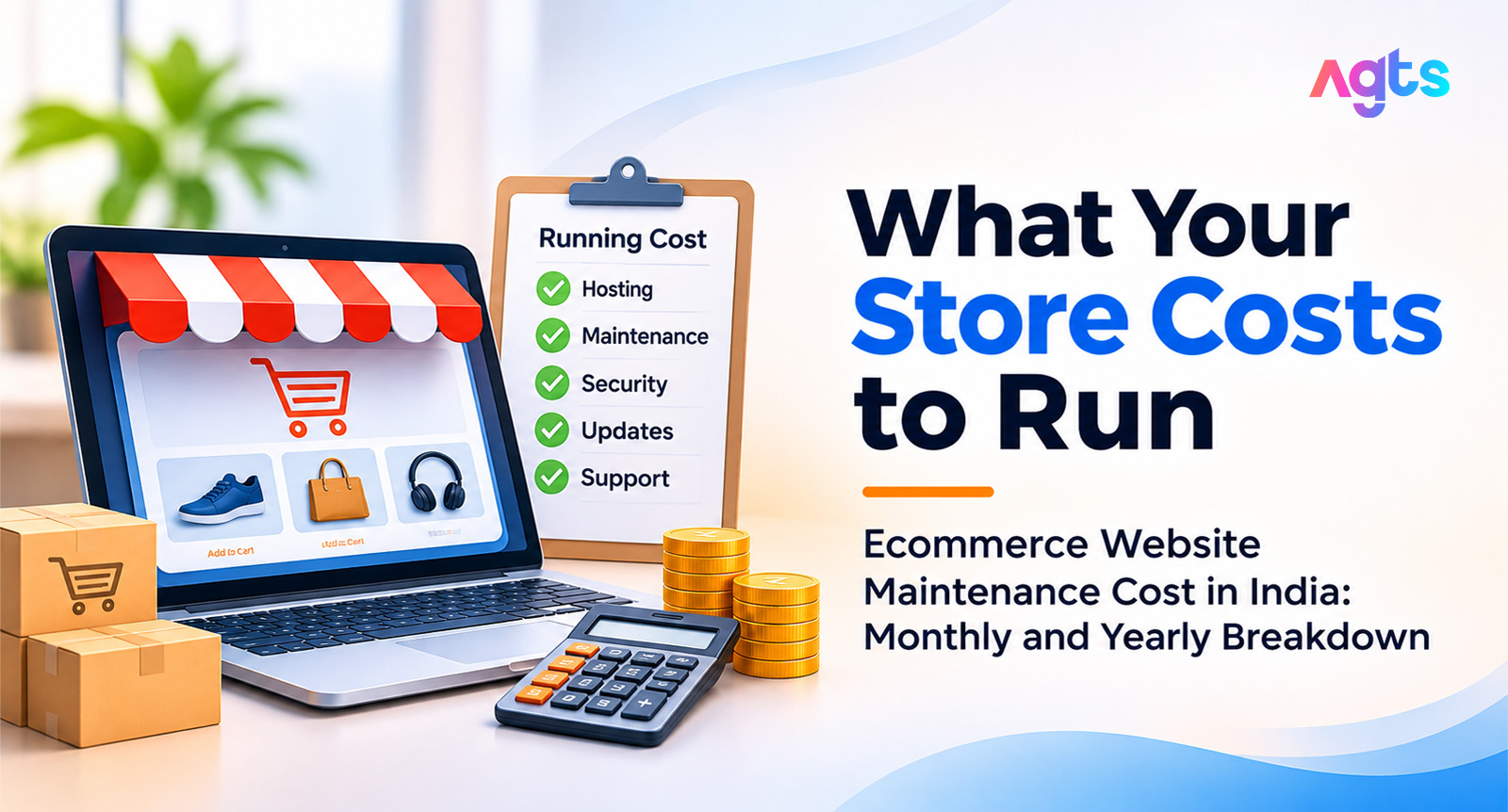
You're Actually Paying Two Bills
This is the one thing that most quotes don't mention and it's what makes the price seem so random.
There are two different costs associated with running an online store.
- Running costs. These ensure that the store is on 24/7, and even if you didn't have a maintenance partner you'd pay them for operating the store:
- the cost of your platform subscription (e.g. Shopify's plans in India range from approximately ₹1,500 – ₹2,000 per month on the Basic plan, with prices subject to change; see Shopify's pricing page for current rates), or hosting if you're using WooCommerce or Magento.
- There are paid apps and plugins which accumulate over time without you noticing them.
- WordPress gateway costs, which are usually approximately 2% per transaction.
- domain and SSL renewals
- The maintenance service. This is the people part: a person who keeps the store up to date and fixes when something goes wrong, and keeps it quick.
If one agency says ₹3,000 and another says ₹25,000, then they are likely to be adding those on to various other elements of their service, and perhaps basing the numbers on significantly varying amounts of work. Before making comparisons, request each quote to separate out the costs.
6 Things That Decide Your Maintenance Cost
1. Your Platform
This is the biggest single factor. Shopify handles hosting and core security for you, so there's simply less to maintain. WooCommerce puts hosting, plugin updates and security on your plate. Magento is powerful but heavy and needs experienced developers. Custom-built stores depend entirely on how well they were built, and who built them.
2. How Many Products You Have, and How Often They Change
A store with 80 products that rarely change is easy. A fashion store adding a new collection every fortnight, with size and colour variants for each, is a different job. Bulk price updates, stock syncing and new category pages all take hours.
3. Integrations
Every connected tool is one more thing that can break. Most Indian stores run a few of these:
- Razorpay, PayU or UPI checkout
- Shiprocket, Delhivery or another shipping partner
- GST invoicing
- Tally or an ERP for stock and accounts
- WhatsApp order updates
When any one of them updates its API, someone has to check your store still talks to it properly. More integrations mean more monitoring, and a higher bill.
4. Traffic and Sale Seasons
If most of your revenue comes during Diwali, wedding season or a big end-of-season sale, your store needs preparing for it: speed testing, load checks, a freeze on risky updates, and someone on call while the sale is live. That's extra work, and it's worth paying for. A checkout that fails on your busiest day costs more than any maintenance plan.
5. Security and Customer Data
Your payment gateway handles card data, which takes a lot of risk off you. But customer names, phone numbers and addresses still sit in your store, and India's DPDP Act, 2023 makes you responsible for protecting them. Stores that need regular security scans, firewall rules and access reviews pay more than ones that don't.
6. How Fast You Need Help
Office-hours support with a next-day response is cheap. A written promise that someone will fix your checkout within two hours, at 11 pm on a Sunday, is not. Decide what you genuinely need before paying for 24/7.
Platform-Wise Cost Breakdown
Shopify Website Maintenance
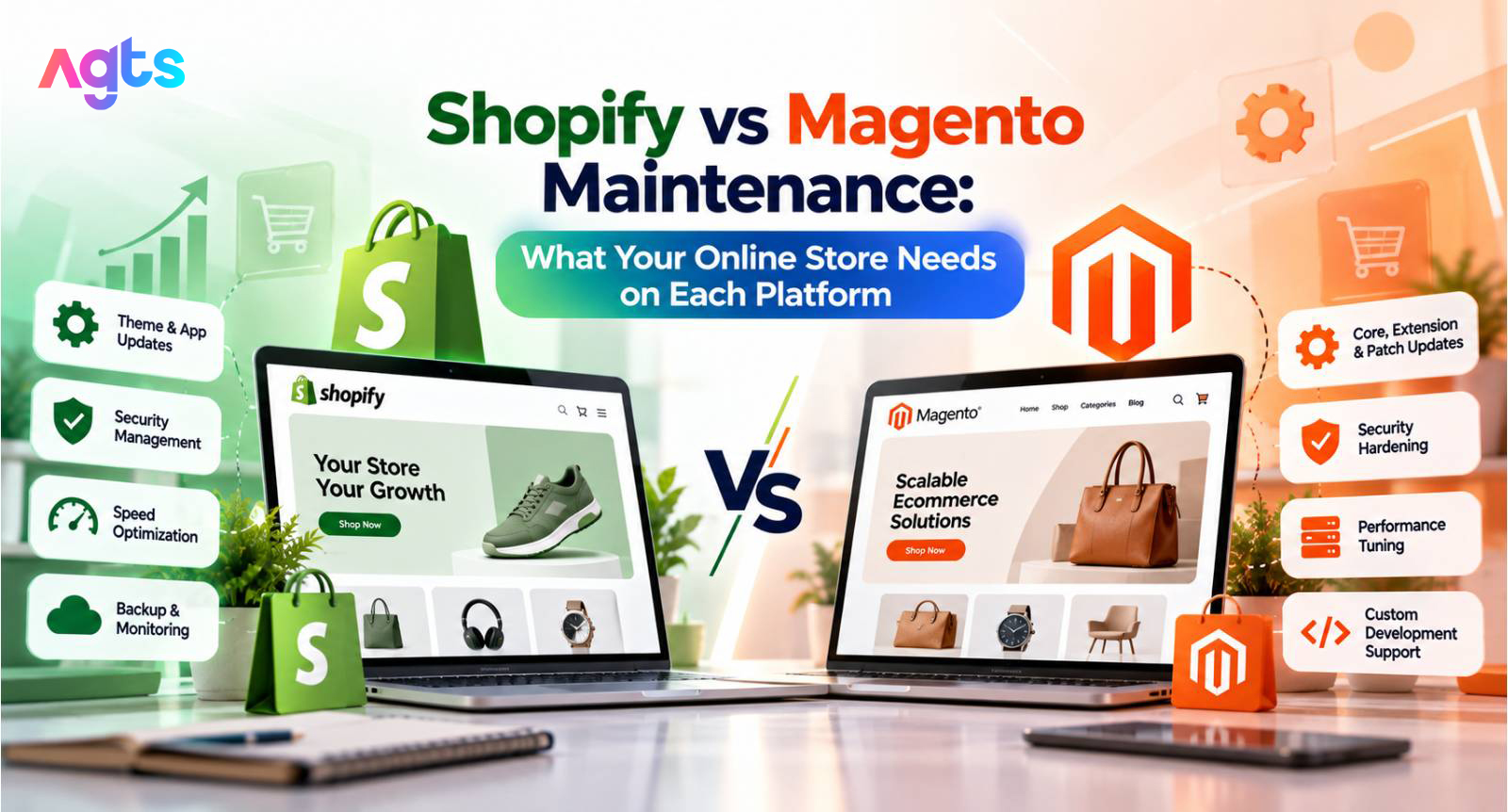
Usually the cheapest to maintain, because Shopify takes care of servers, core updates and platform security. The work is mostly theme updates, app clean-ups (unused apps are a common cause of slow stores), speed tuning and content changes. Most small and mid-sized Shopify stores sit at the lower end of the ranges above.
WooCommerce
More hands-on. WordPress core, WooCommerce itself, the theme and every plugin need updating and testing, and you're responsible for hosting and security. Costs typically sit in the middle of the range.
Magento (Adobe Commerce)
The most expensive to maintain. Updates are complex, specialist developers charge more, and hosting needs are heavier. It makes sense for large catalogues; it's overkill for most small stores.
Custom-Built Stores
Hard to price without seeing the code. A well-documented custom store can be reasonable to maintain. One built by a developer who has since disappeared, with no documentation, can cost more than a rebuild.
|
Platform |
Typical Monthly Maintenance |
What Pushes the Cost Up |
|
Shopify |
₹3,000 – ₹15,000 |
Many apps, custom theme code, frequent catalogue changes |
|
WooCommerce |
₹5,000 – ₹25,000 |
Plugin count, hosting setup, security needs |
|
Magento |
₹20,000+ |
Version upgrades, extensions, server requirements |
|
Custom |
Varies widely |
Code quality and documentation |
Monthly Plan or Yearly AMC: Which is Cheaper?
A monthly plan gives you flexibility. If you're testing a new store or unsure about a provider, start here.
A yearly AMC (annual maintenance contract) is usually 10 to 15% cheaper over twelve months and often comes with priority support. Once you trust your provider, it's the better deal.
Pay-per-task, where you pay hourly only when something breaks, looks cheapest on paper. It rarely is. Emergency work gets billed at premium rates, nobody is watching the store in between, and small problems grow into big ones.
A quick example: a growing store on a ₹12,000 monthly plan pays ₹1.44 lakh a year. The same scope on a yearly AMC with a 12% discount comes to about ₹1.27 lakh, a saving of roughly ₹17,000.
Hidden Costs That Blow Up Ecommerce Budgets
These are the ones that catch store owners off guard:
- App creep. Five ₹800-a-month apps you forgot you installed cost ₹48,000 a year.
- Emergency fixes billed by the hour. Usually at a higher rate, and always at the worst time.
- Sale-day downtime. Lost orders during a festive sale can wipe out months of margin.
- A checkout that breaks after an update, and nobody notices for a few days.
- No backup. If the store goes down and can't be restored, you're paying for a rebuild.
We've written more about what goes wrong when stores are left alone in [what happens if you don't maintain your website](LINK: what-happens-if-you-dont-maintain-your-website blog).
5 Ways to Keep Maintenance Costs Down
- Audit your paid apps every quarter. Cancel anything you're not actively using.
- Use fewer, better plugins. Every extra plugin is one more update and one more possible conflict.
- Plan sale-season work early. Rushed work in the week before Diwali always costs more.
- Switch to a yearly AMC once you're happy with your provider.
- Don't over-customise your theme. Heavy custom code makes every future update slower and more expensive.
How to Choose Ecommerce Website Maintenance Services
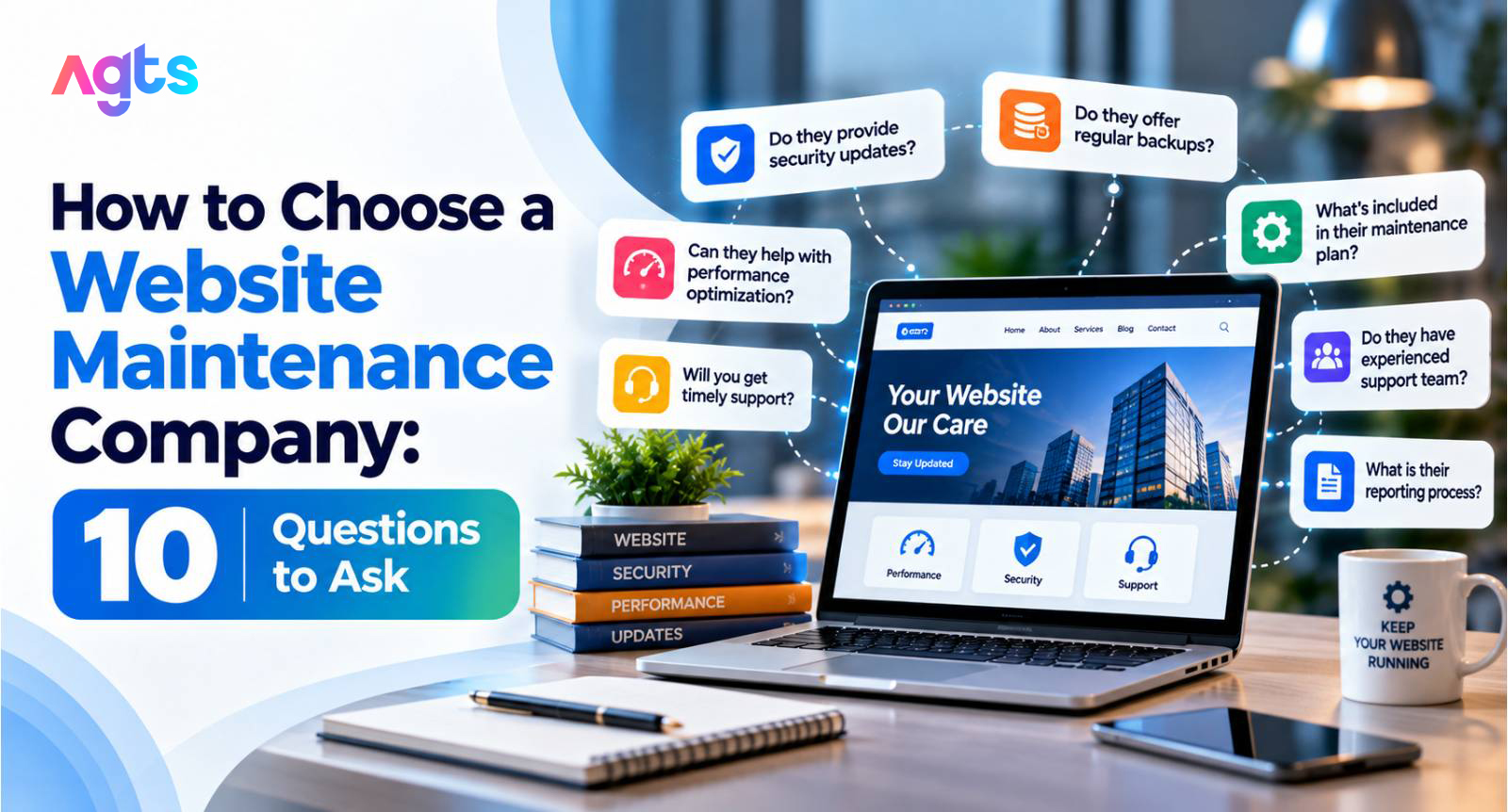
Before you sign, ask any provider of ecommerce website maintenance services these questions:
- "Do you test the checkout after every update?" If the answer is vague, walk away.
- "Who's on call during my sale?" Get a name, not a helpdesk email.
- "Can you split your quote into running costs and service costs?"
- "Which platforms do you actually work on every day?" Shopify and Magento experience are not the same thing.
- "What does your monthly report show?" Ask for a sample.
AGTS Ecommerce Maintenance Plans
AlphaGenix Technology Solutions (AGTS) has been building and maintaining websites since 2009, and online stores on Shopify, WooCommerce and custom platforms are a big part of that work. AGTS handles updates, security, backups, speed, integration checks and sale-season preparation, so you can focus on selling.
Not sure which level your store needs? Start with a free store health check. We'll review your platform, apps and integrations, and give you a clear quote with running costs and service costs shown separately.
Get a free store health check and quote from AGTS
Frequently Asked Questions
What is the cost of ecommerce website maintenance in India?
Most small stores pay ₹3,000 to ₹8,000 a month for maintenance, growing stores ₹8,000 to ₹25,000, and large or custom stores ₹25,000 or more. Usually the paid apps and hosting are charged separately from the platforms.
Which is more cost-effective to operate, Shopify or WooCommerce?
Usually, yes. It's hosted and secured by Shopify so there is less work to be done on an on-going basis. WooCommerce requires regular plugin and core updates, hosting management and security monitoring, and this increases the expense.
What does ecommerce website maintenance entail?
A good plan includes platform and plugin updates, security scan, backup, speed check, checkout and integration test, minor content changes and a monthly report. Faster support and preparation for the sales season is offered in higher plans.
But is an annual AMC plan preferable to a monthly plan?
Yes if you are satisfied with your provider. Typically an annual AMC would be 10-15% less expensive and may also offer priority support. It is good to use a monthly plan until you have tried a provider.
What's the difference between ecommerce maintenance and normal website maintenance?
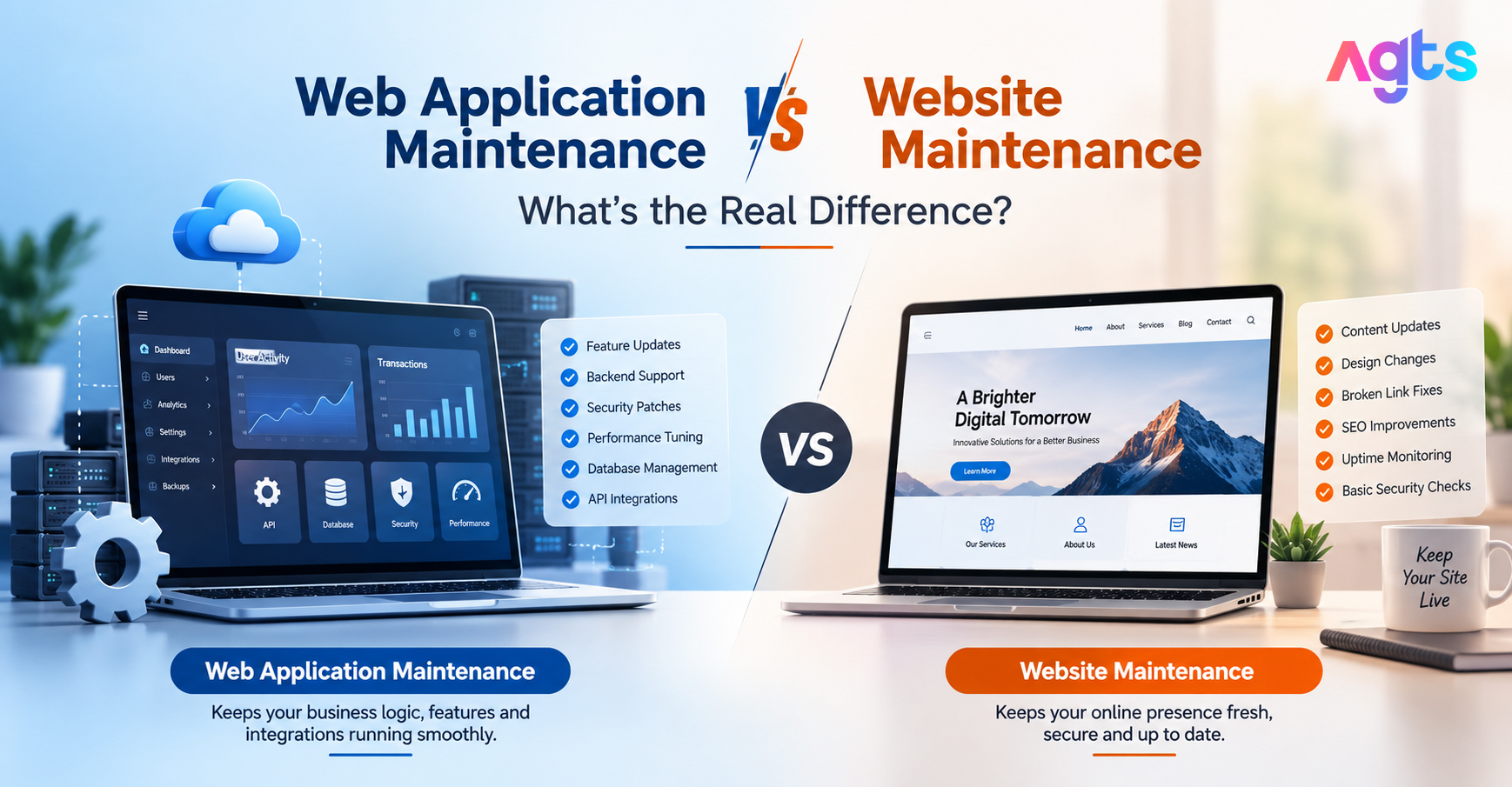
There are a lot more moving parts for an online store: checkout, payment gateways, shipping and stock integrations and the customer's data. Each and every one of them requires periodic testing and a failure translates to lost sales.
Am I able to operate my web business myself?
Simple tasks such as adding products and updating prices can be done. Any update, security or integration changes should be handled by someone who's experienced or is doing it correctly or else it could cause your checkout to shut down.