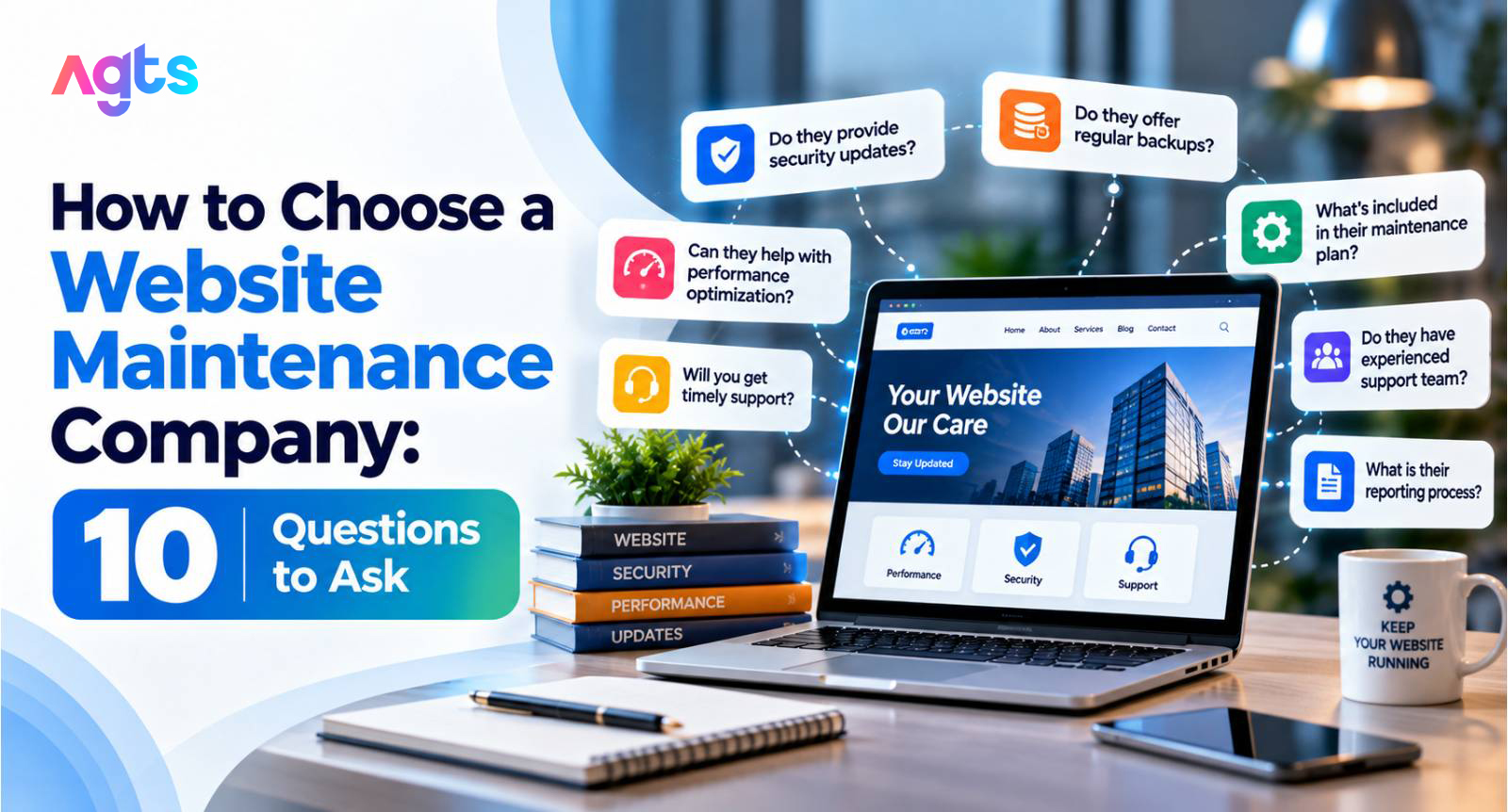
Picking a website maintenance company feels easy. Until something breaks.
We've taken over plenty of websites from other providers, and the story is often the same. The business paid every month. Everyone assumed the site was being looked after. Then it got hacked, or crashed after an update, and suddenly nobody was answering the phone. Or the "maintenance plan" turned out to cover backups and nothing else.
There are some honest questions to ask before you sign, that will help you avoid most of this. If you're looking at two freelancers in your area, or multiple website maintenance companies in India, the following questions will let you know who's actually going to take care of your site and who's only going to send you an invoice.
Before You Start: Know What You Need
Take ten minutes to jot down a few basics. It'll make every conversation easier.
- Your platform. WordPress, Shopify, a custom PHP or Laravel site? It changes who can help you.
- How often your content changes. Weekly offers need more support than a site you update twice a year.
- How important the site is to sales. If enquiries or orders come through it daily, fast support matters a lot.
- Who has the logins. Domain, hosting, admin panel. If you don't know, find out now.
With that in hand, here's what to ask.
1. What exactly is included every month?
This may seem like a no-brainer, but this is where most issues arise. From once a month backup to complete care, including updates, security, speed, and content change.
Ask for the scope in writing. How many times per month will you be editing content? Are there plugin updates available? Speed fixes? Bug fixes?
A good answer: a clear list you can check against later, not a vague "we'll take care of everything".
2. How fast do you respond when the site goes down?
Your website will have a bad day at some point. The important factor is noticing and acting quickly.
Inquire about response times for emergency problems versus small requests, if they monitor it themselves or expect you to call them up if it's not doing.
A good answer: a definite time (e.g., "within a few hours for downtime") and automatic alerts so that they know often before you do.
3. How do you handle backups, and have you ever restored one?
Almost every provider says they take backups. Fewer can tell you how often, where they're stored, or how long a restore takes.
Backups kept on the same server as your website aren't much help if that server fails. And a backup nobody has ever tested is really just a hope.
A good answer: regular backups stored off-server, and a clear idea of how long it takes to bring your site back.
4. How do you keep the site secure?
Outdated software is one of the most common ways websites get hacked. A good maintenance partner stays ahead of that.
Ask about malware scanning, firewalls, SSL tracking, login protection, and what they do if the site does get hacked.
A good answer: regular scans and updates, and a clear plan for clean-up if something gets through. Bonus points if hack recovery is included rather than charged extra.
5. Test updates before using them on the live site?
Updates are required, but can lead to destroying your layout, contact form or checkout if you're careless. Typically at the least opportune time.
Discuss if they test on a staging copy, and what they do if a problem arises with the update.
A good answer: "We test first and take a backup prior to updating, and if something goes wrong we roll back really quickly.
6. Do you have experience running a web site like mine?
A WordPress master might not know how to work with a custom Laravel app, or a hectic Shopify store. Each platform requires certain skills.
Request sample sites that you can see they have similar to yours, preferably in your line of business or of your size.
A good answer: real examples, and a few smart questions back to you about how your site is built.
7. Who will actually work on my website?
Some providers place your request in a queue and it's assigned to anyone available. It's okay for minor changes, but it's stressful if something important breaks and you have to repeat the process of all your changes and instructions from the beginning.
See if you will be assigned a contact, and how to contact them, by email, phone, WhatsApp or a ticket system?
A good answer is a named individual or small group that has an intimate knowledge of your site and a straightforward method for getting in touch with them.
8. What will your monthly report show?
You don't judge without being able to see the work. A brisk monthly report ensures that people are on their toes.
Ask to see a sample. It should display what has been updated, backed up, security checks made, uptime and any problems resolved.
Good answer: a two-minute read, a report, not a 20-page jargon-laden PDF.
9. What isn't covered, and how are extra tasks charged?
This is a question that people often overlook and this is where surprise bills come from. A lot of times there are new pages, design changes, large features and hack recovery all other than what is in a standard plan.
Ask about what is meant by 'extra' and how it is calculated (hourly, per task or quoted every time):
A good answer: a clear list of exclusions and a simple way of pricing extra work, agreed before it starts. For a broader look at pricing, see our guide to website maintenance cost in India.
10. Who owns the logins, hosting and files if we part ways?
Nobody likes to think about breaking up at the start. But it matters. Some businesses have found that their domain, hosting or admin access was in the provider's name, which turned switching into a headache.
Ask directly: if we stop working together, what do we get, and how quickly?
A good answer: "Everything is yours. We'll hand over all logins, files and backups whenever you need them."
Good Signs vs Red Flags
When you're comparing website maintenance companies side by side, this quick table helps.
|
Good sign |
Red flag |
|
Scope of work in writing |
"Don't worry, we'll handle everything" |
|
Clear response times |
No answer about urgent support |
|
Off-server backups, tested restores |
"Your host takes backups" |
|
Updates tested before going live |
Updates pushed straight to the live site |
|
Named contact who knows your site |
A different person every time |
|
Short, clear monthly reports |
No reports, or only on request |
|
Extra costs explained upfront |
Surprise invoices |
|
You keep ownership of everything |
Domain or hosting in their name |
Making the Final Call
After answering these questions, narrow your list down to two or three web maintenance companies that answered your questions confidently and clearly. Then:
- Ask for a website audit. A good provider will be glad to take a look at your site first and let you know what they see that needs some work. This says much about them by the way they explain it.
- Check reviews. Check Google reviews and other sites like Clutch as well as the reviews on their own site.
- Start with a monthly plan. It enables you to view their operations before signing the lengthy contract.
- Trust your gut. If they are in a rush, don't ask questions; if they dodge your questions, don't make any promises – continue looking.
It is not always the cheapest that is the best. A few dollars a month is not that much when you consider the price tag of a hacked site, lost enquiries or a weekend spent working to get your website back online.
Why Businesses Choose AGTS
At AlphaGenix Technology Solutions (AGTS), we'd be happy to answer every one of these questions for you. We've been building and maintaining websites since 2009, and our website maintenance plans cover updates, security, backups, speed and day-to-day fixes, with a clear scope and a monthly report.
You'll have a dedicated point of contact, and everything stays in your name. We also take over websites built by other companies, starting with a free audit so you know exactly where things stand.
If you're comparing website maintenance companies right now, start with us. Ask for a free website audit and put us to the test.
Frequently Asked Questions
- What to expect from website maintenance companies?
Seek a written scope of work, response times, backups off server, tested updates and simple monthly reports, and regular security checks. Remember to retain your domain name, hosting account and login information.
- So, what questions should I ask before taking out a website maintenance company?
Question them about what comes with their monthly subscription, how quickly they're able to respond to the problems when they arise, how they handle backups and security, who will be working on your site, what they don't cover, and how they'll deal with your logins and files if you break up.
- Is a freelancer or a website maintenance company better?
A freelancer can work well for small, simple websites. A company is usually safer for business-critical sites, because there's a team to cover holidays, emergencies and a wider range of technical skills.
- How fast should a website maintenance company be?
If you have downtime or your site is hacked you should receive a response from a good provider in a few hours. Content edits are generally complete in 1-2 working days for smaller requests such as these.
- What is the benefit of signing a monthly or yearly maintenance contract?
You can test a provider's service with a monthly plan. If you are satisfied with it, an annual contract may be more cost effective and have a fixed price.
- Can I switch website maintenance companies later?
Yes. As long as your domain, hosting and admin accounts are in your name, switching is straightforward. A good new provider will start with an audit of your site before taking over.
- Does AGTS maintain websites built by other companies?
Yes. AGTS starts with a free website audit to check the platform, code and security, then recommends a monthly plan based on what your website needs.